Quick answer
- Insurance is a sequence, not one purchase: When starting an NEMT business, most new operators have an insurance conversation at nearly every startup step, from choosing a business entity to adding the first vehicle and driver. Having those conversations early tends to prevent delays later.
- Enrollment paperwork leans on your insurance documents: DHCS describes proof of liability and workers’ compensation insurance among the items uploaded during provider enrollment, so the policy side often needs to be in place before the application is complete. Approval is up to DHCS and is never guaranteed.
- Certificates come last, but plan for them first: Contracts with health plans, brokers or facilities may ask for certificates and endorsements. What a policy can show depends on the policy and carrier.
Step 1: Set up the business entity and the paper trail
Before anyone talks to an insurance agency, it helps to have the basics settled: the legal name of the NEMT business, its structure (sole proprietor, LLC, corporation or partnership), the tax ID, and any local business license or permit. Which structure fits your situation is a question for your attorney or accountant, not something this article can answer.
Why it matters for insurance: names and addresses on policies, vehicle registrations and enrollment documents generally need to line up. DHCS’s provider application page says the applicant’s name and business address must exactly match the insured’s name and address on the liability certificate, and that names and addresses should also match across tax, license and fictitious-name documents. Settle the legal name and any trade name first, because a mismatch can cause a certificate to be questioned.
Conversation to have: ask the agency which named insureds and addresses the policies will carry, and whether a trade name or second location needs to appear.
Step 2: Understand the DHCS enrollment path
According to the DHCS page on medical transportation and non-emergency transportation provider applications, medical transportation providers apply through the state’s online enrollment system, PAVE. The page describes uploading supporting documents, which include items such as tax ID documentation, local business licenses or permits (or a statement that none is required), fictitious business name paperwork where applicable, partnership or corporate papers, a lease if you do not own your premises, the signer’s identification, and proof of liability and workers’ compensation insurance.
This article does not walk through every enrollment rule, and requirements can change. Read the DHCS page directly, and ask DHCS or your attorney about anything that is unclear. If you are also weighing broker or health-plan contracts, those have their own insurance requirements, which is a separate topic from enrollment.
Conversation to have: ask the agency what insurance documents it can typically provide for an application, and what information it needs from you to prepare them.
Note that enrollment, fees and approval decisions sit with the state. Nothing here promises Medi-Cal enrollment or that any application will be accepted.
Step 3: Choose vehicles and plan for equipment
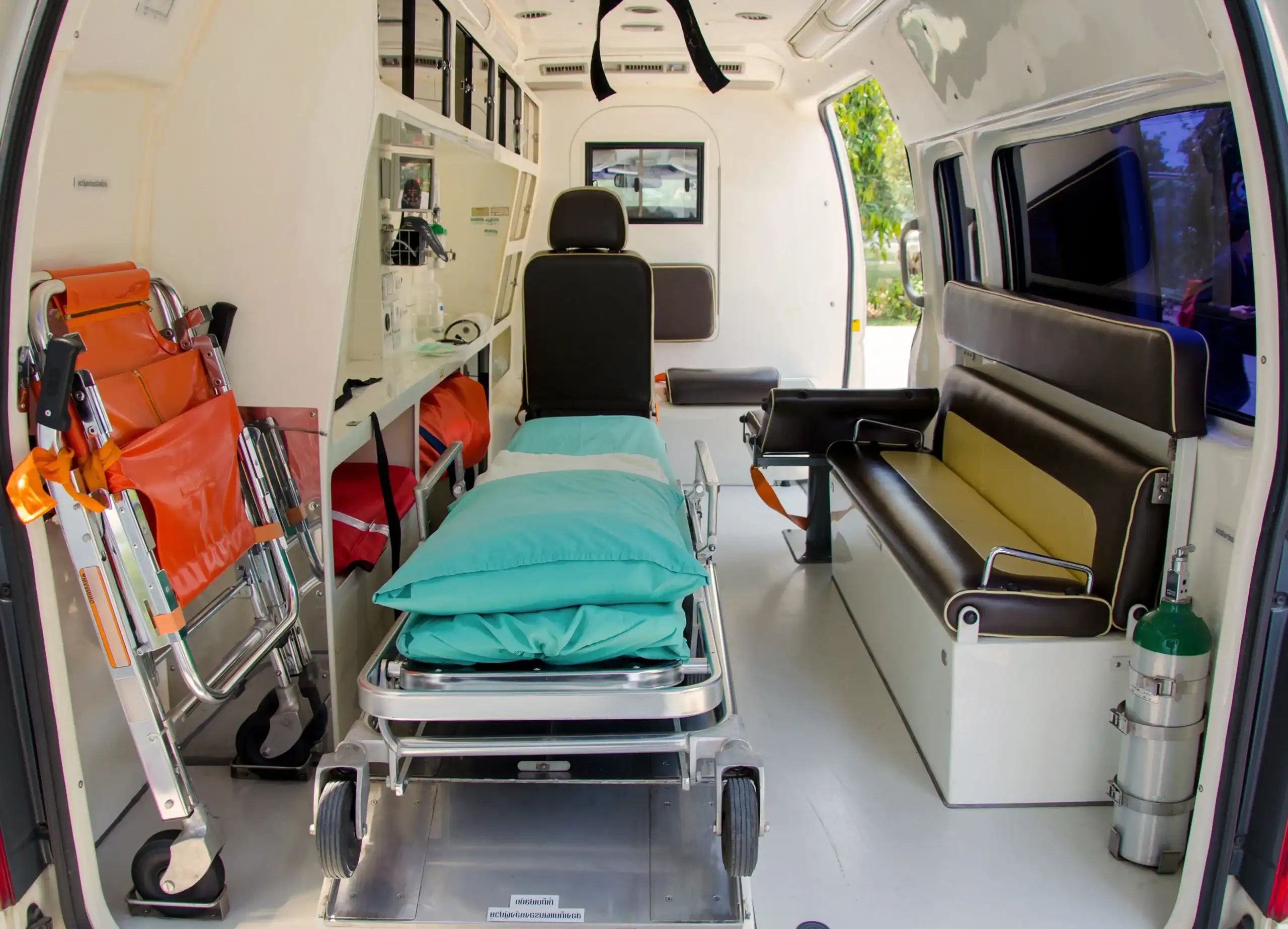
NEMT vehicles vary widely. Ambulatory sedans and vans, wheelchair-accessible vans with lifts or ramps, and stretcher or gurney vehicles are different operations, and carriers often treat them differently. The DHCS page distinguishes litter and wheelchair vans from other vehicles and refers to additional vehicle documentation for those, such as commercial registration, proof of commercial vehicle insurance, and inspection or permit items where applicable. Confirm the current list on DHCS’s page rather than relying on a summary here.
Why it matters for insurance: underwriters typically ask about vehicle type, age, value, and installed equipment such as lifts and restraints. Whether physical damage coverage reaches aftermarket equipment depends on the policy and carrier, so ask before buying a conversion rather than after a claim.
Conversation to have: share the vehicle list early, including any modifications, and ask whether equipment is covered and how.
Step 4: Hire and vet drivers
Driver qualification is often the biggest underwriting variable for a new NEMT business. Carriers may review motor vehicle records, years of licensed driving, experience with passengers who have mobility needs, and your hiring standards. The DHCS page lists driver documentation for litter and wheelchair van operations, including a DMV driving record printout, first aid and CPR certificates, and drug and alcohol testing documentation. Confirm the current list directly on DHCS’s page.
Why it matters for insurance: an insurance application usually asks for a driver list, and adding drivers later typically means more underwriting review. Owner-operators and multi-vehicle fleets face different questions, such as whether drivers are employees or contractors, which is a classification question to raise with your attorney and the agency.
Conversation to have: ask what driver criteria carriers in your situation tend to look at, and how to add or remove a driver mid-term.
Step 5: Line up the policies for your NEMT business
The NEMT insurance page describes the coverages commonly involved, so this article only maps them to the startup steps. In general terms, an NEMT business may be asking about:
| Coverage | Typically relevant to |
|---|---|
| Commercial auto liability | Every vehicle carrying patients |
| Physical damage | Owned or financed vehicles and installed equipment |
| Hired and non-owned auto | Staff or contractors using vehicles you do not own |
| General liability | An office, yard or dispatch location |
| Workers’ compensation | Employees; usually placed separately from auto |
Whether you need each of these, and at what limits, depends on your operation, your contracts and the policy and carrier. DHCS’s page sets its own minimum liability limits for applicants, and the regulation it points toward, 22 CCR §51000.30 (as reproduced by Cornell LII), refers only to workers’ compensation as required by state law, liability insurance covering premises and operation, and full coverage commercial insurance for each litter or wheelchair van, without dollar figures. Because the two sources differ in detail, check DHCS’s current page for limits rather than relying on this article. Also keep in mind that a contract partner may ask for more than a state enrollment minimum.
For a broader look at how coverage fits the medical transportation industry, see the medical transportation insurance overview.
Conversation to have: ask the agency to explain, in plain language, what is and is not covered, including exclusions, and how a claim involving a passenger is typically handled.
Step 6: Plan certificates and endorsements
Health plans, brokers and facilities may ask for a certificate of insurance and sometimes an additional insured or other endorsement. A certificate summarizes coverage; it does not change the policy. Whether a particular endorsement is available depends on the policy and carrier, and it may take time, so avoid promising a contract partner a specific wording until you have confirmed it.
Conversation to have: ask what the agency needs from you to request a certificate, and share the contract’s insurance clause as early as you can.
A simple startup order for a new NEMT business
- Settle the legal name, structure and tax ID with your advisors.
- Read the DHCS enrollment page and gather documents.
- Decide on the first vehicles and equipment.
- Define driver standards and identify first hires.
- Request quotes with complete vehicle, driver and operations information.
- Confirm certificates and endorsements against contract requirements.
FAQ
Do I need insurance before I apply to DHCS?
DHCS describes proof of liability and workers’ compensation insurance among the documents uploaded with an application, so insurance is typically arranged in parallel with enrollment. Check the DHCS page for current requirements, and ask your attorney if you are unsure how they apply to you.
Can one policy cover wheelchair and stretcher transport?
It depends on the policy and carrier. Different vehicle types and services can be underwritten differently, so describe every service you plan to offer when you request a quote.
Will having insurance get me approved for Medi-Cal enrollment?
No. Insurance is one part of the paperwork. Enrollment decisions are made by the state, and nothing guarantees approval.
Talk to an independent agency
Wilk Business Insurance Services is an independent agency that places commercial auto and transportation risks. If you are starting an NEMT business, request a quote or call 805-755-2025, Monday through Friday, 8:30am to 4:30pm Pacific.
This article is general information, not legal or insurance advice. Coverage depends on the policy and carrier, and eligibility and terms vary.